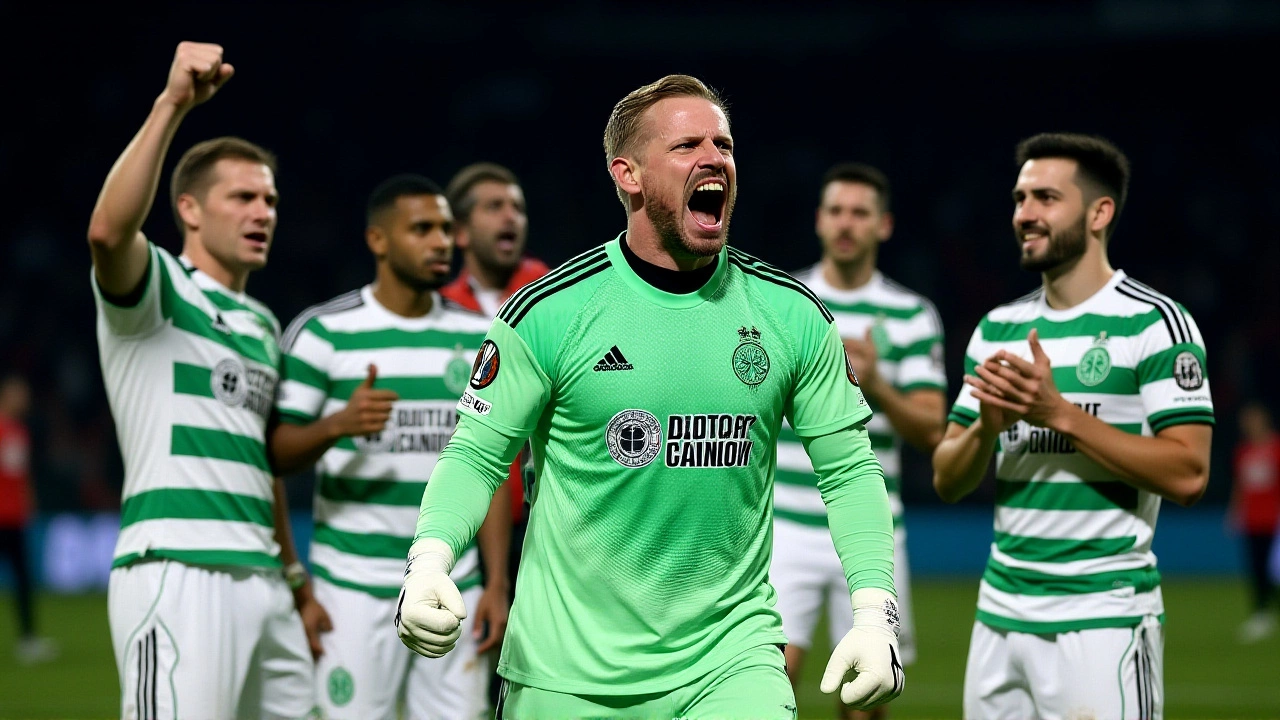
It wasn't just a win. It was a release. After 1,440 days without a Europa League group stage victory, Celtic Football Club finally broke through — and they did it in style, thrashing Feyenoord Rotterdam 3-1 at Stadion Feijenoord (De Kuip) in Rotterdam on Thursday, November 27, 2025. The final whistle didn’t just signal three points; it marked the emotional end of an era. Martin O'Neill, the 72-year-old Northern Irish veteran stepping in as interim manager, coached his final European match for the Glasgow side — and he did it with the kind of poise that reminded everyone why he once led them to a UEFA Cup final.
A Win Long Overdue
Celtic hadn’t won a Europa League group stage match since December 9, 2021, when they beat Real Betis 3-2 in Seville. Since then? A string of defeats, early exits, and the bitter taste of being pushed into the Europa League from the Champions League group stage in both 2022/23 and 2023/24. That’s nearly four years without a single group stage win in Europe’s second-tier competition. The pressure wasn’t just on the players — it was on the entire club’s European identity.
But on this night, everything clicked. A crisp 17th-minute strike from young forward Liam Scales opened the scoring. Feyenoord equalized through a well-worked set piece in the 34th minute, but Celtic responded with two thunderous goals in the second half — a curling finish from captain Callum McGregor in the 58th minute and a clinical counterattack goal from Jota in the 76th. The home crowd fell silent. The away section erupted.
O’Neill’s Final European Chapter
Martin O'Neill didn’t take the job expecting to stay long. Hired on November 15, 2025 — just two days after the previous manager was sacked following a 2-0 loss to Dynamo Kyiv — his mandate was simple: stabilize the ship for the final four Europa League matches. No long-term vision. No rebuilding. Just survival.
And yet, he delivered more than survival. He delivered significance. ESPN’s match analysis called it “a memorable final postscript in his history with Celtic in Europe.” And it’s true. O’Neill’s first stint as Celtic manager — from 2000 to 2005 — included that unforgettable 2003 UEFA Cup Final run. Now, in his twilight, he’s left a second legacy: a win that rekindled belief.
"He didn’t change the system," said one veteran Celtic supporter in the stands. "He just reminded us what winning feels like. And he did it when nobody else could."
The New Format, The New Stakes
This wasn’t just any Europa League match. It was part of the inaugural single-league-phase format introduced in 2024/25, replacing the old group structure with a 36-team round-robin. Top eight qualify directly for the round of 16. Teams ranked 9–24 enter playoffs. And 25–36? Eliminated. No second chances.
Before this match, Celtic sat at 27th place with 4 points (1 win, 1 draw, 2 losses). Feyenoord, at 29th, had only 3 points. The difference between survival and oblivion? Just one win. Now, Celtic sit 13 places above the drop zone. But they need at least 10 points to realistically challenge for the playoffs. That means they must win at least two of their final four games.
"This result achieves the specific objective set by the board," confirmed Nicholas Hay, Celtic’s Director of Football, in a post-match statement. "We needed a win. We got it. Now we build on it."
The Financial and Psychological Lift
There’s money here, too. UEFA’s 2025/26 solidarity payments awarded Celtic €500,000 for the win. But the real windfall comes from broadcast distribution — estimated between €1.2 million and €1.8 million depending on final league position. For a club still recovering from financial strain in recent years, that’s not just a bonus. It’s a lifeline.
And psychologically? It’s priceless. After years of being written off as a fading force in Europe, this win reasserts Celtic’s place on the continent. Even more so, it gives the next permanent manager — whoever that may be — a platform to build from. No more starting from zero. Now, they start from hope.
What’s Next?
Celtic’s next test is home on December 12, 2025, against Dynamo Kyiv at Celtic Park in Glasgow. A win there would put them within striking distance of the playoffs. A draw? Still manageable. A loss? Back to the brink.
Feyenoord, meanwhile, are in deep trouble. CEO Robert Visser admitted after the match that their qualification hopes are "severely damaged." With only four games left and a leaky defense, they’ll need a miracle.
Historical Echoes
This win echoes the 2021/22 campaign under Ange Postecoglou, when Celtic last won a group stage match — again, away from home, again in Spain. But back then, they still failed to advance. This time, the context is different. The format is tougher. The stakes are higher. And the emotional weight? Unmatched.
For Martin O’Neill, it’s the end. He’s already confirmed he’ll step down after the Dynamo Kyiv match. But in his final act, he didn’t just win a game. He gave Celtic something they hadn’t felt in over three years: belief.
Frequently Asked Questions
How significant is this win for Celtic’s European future?
This win breaks a 1,440-day drought in Europa League group stage matches and lifts Celtic to 27th place in the 36-team league phase. With 4 points, they’re now 13 spots above the elimination cutoff. To reach the playoffs, they need at least 10 points — meaning two more wins in their final four matches. It’s not a guarantee, but it’s a lifeline after years of European irrelevance.
Why did Martin O’Neill take the interim job?
O’Neill was appointed on November 15, 2025, immediately after the previous manager was dismissed following a loss to Dynamo Kyiv. His sole mandate was to oversee Celtic’s final four Europa League fixtures while the club searched for a permanent replacement. He had no interest in a long-term role — but he delivered far more than expected, capping his career with a win that resonates beyond statistics.
What’s the financial impact of this victory?
Celtic earned €500,000 in UEFA solidarity payments for the win. More importantly, their position in the league phase boosts their share of broadcast revenue, estimated between €1.2 million and €1.8 million depending on final ranking. For a club that reported a £12 million deficit in 2023/24, this revenue is critical to stabilizing finances and funding future transfers.
How does the new Europa League format affect Celtic’s chances?
The 2024/25 format replaced traditional groups with a single 36-team league table. Every match matters. Only the top eight qualify directly for the round of 16. Teams ranked 9–24 enter playoffs, and 25–36 are eliminated. Celtic’s 27th-place standing means they’re still within reach of the playoffs — but they must win at least two of their final four matches to have any realistic chance.
What’s next for Feyenoord after this loss?
Feyenoord now sit 29th with just 3 points from 4 matches. With only four games remaining, they need to win at least three — and hope for multiple upsets above them — to have any hope of reaching the playoffs. Their defense has conceded 8 goals in 4 matches, and morale is low. CEO Robert Visser called the result "devastating," and managerial changes may be coming before the winter transfer window.
Did Celtic’s win have any historical parallels?
Yes. Their last group stage win came on December 9, 2021, against Real Betis in Seville under Ange Postecoglou — also a 3-2 away victory. But back then, they finished with only 7 points and failed to advance. This time, the format is tougher, the competition deeper, and the pressure greater. Winning now isn’t just nostalgia — it’s a foundation for a new era.