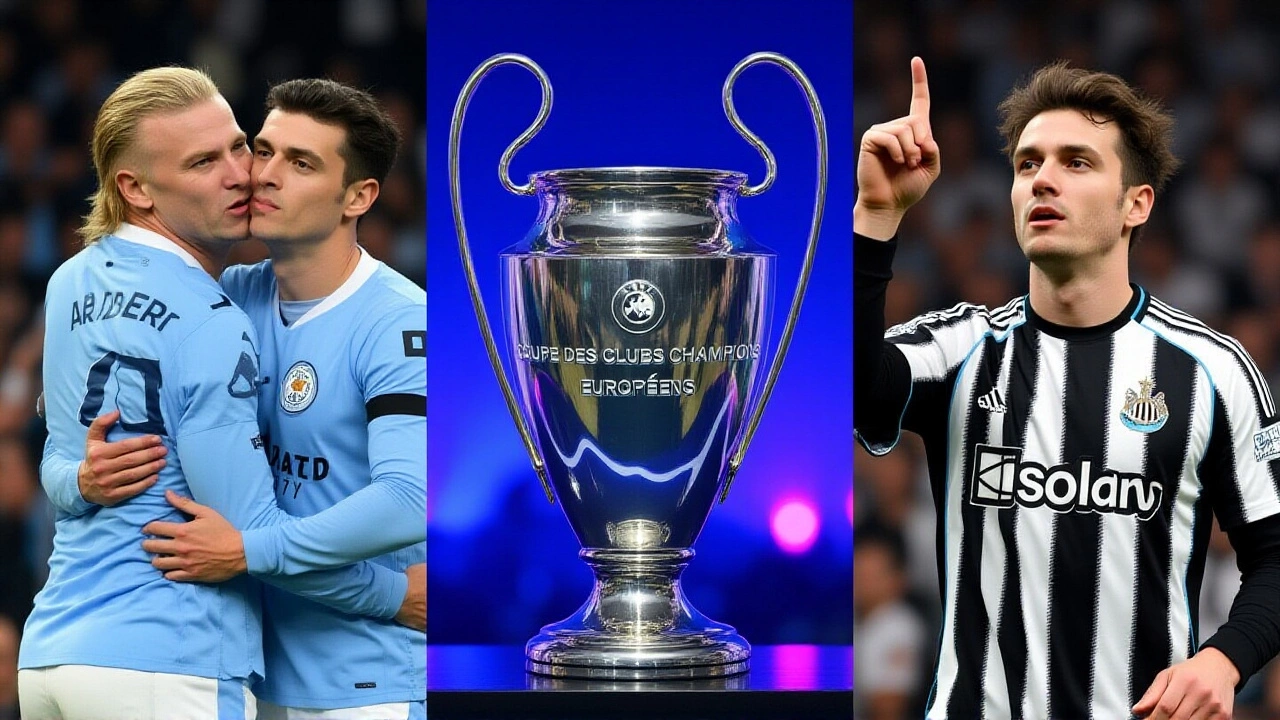
On a rain-slicked night in Munich, Paris Saint-Germain didn’t just win the 2024/25 UEFA Champions LeagueAllianz Arena—they rewrote their legacy. A 5-0 demolition of Inter Milan on May 31, 2025, delivered the club’s first European crown after decades of near-misses, including a heartbreaking 2020 final loss to Bayern Munich. The victory wasn’t just a win; it was a statement. Under manager Luis Enrique, PSG didn’t just play—they overwhelmed. And for the first time since Qatari ownership began in 2011, the French giants stand atop Europe.
A Night of Perfect Execution
The scoreline told the story: five goals, zero replies. Ousmane Dembélé opened the floodgates in the 12th minute with a curler from the edge of the box, a strike that seemed to deflate Inter before they’d even settled. By halftime, it was 3-0—goals from Achraf Hakimi and Sergio Ramos (yes, that Ramos, back in the fold after a year away) had turned the final into a coronation. The second half was a clinical exhibition. Vitinha added a fourth with a low drive from 20 yards, and Kylian Mbappé sealed it with a counterattack goal in the 83rd minute, his 11th of the campaign. Inter, who’d survived a brutal knockout phase—including a 4-3 aggregate win over Bayern Munich—looked shell-shocked. Their defense, once so resilient, collapsed under relentless pressure.
The New Format, The New Era
This wasn’t just any final. It was the first under UEFA’s radical 2024/25 format: 36 teams in a single league phase, no more group stage, 8 matches per club. The change, introduced to boost revenue and unpredictability, delivered exactly that. The tournament featured 189 matches and 618 goals—the most in Champions League history. Paris Saint-Germain finished the league phase second behind Bayern Munich (626.12 vs. 645.29 in Footballcritic’s ratings), then dismantled Aston Villa in the semis after trailing 3-1 in the first leg. Their resilience became their signature. Meanwhile, Inter Milan clawed their way through, eliminating Bayern in a thriller and surviving a 1-0 win over Sparta Prague in the last 16. But they met a force that had been building since September.
Stars, Stats, and Surprises
The Golden Boot went to Raphinha of FC Barcelona and Serhou Guirassy of VfB Stuttgart, both with 13 goals. Robert Lewandowski (11) and Harry Kane (11) chased them close, but neither reached the final. Marko Tolić of Benfica led in yellow cards (6), a grim reminder of the tournament’s physical toll. But the real story was consistency: Barcola of PSG played all 17 matches, a feat matched only by two others. And while Bayern Munich topped the analytics leaderboard, it was PSG’s balance—defensive discipline paired with explosive transitions—that made the difference.
Why This Matters Beyond Paris
This win changes everything for PSG. For 14 years under Qatari ownership, they’ve been the club that came close—too often, too painfully. The 2020 final loss to Bayern haunted them. The 2021 semifinal collapse against Manchester City stung. But now? The narrative shifts. Suddenly, they’re not the perennial underachievers. They’re the champions who beat a seasoned Inter side with ruthless efficiency. For French football, it’s a landmark. No Ligue 1 club had won the Champions League since Marseille in 1993. For the Premier League’s dominance, it’s a crack in the armor. And for the 36-team format? It worked. The chaos created drama. The league phase gave every team a fighting chance. The final wasn’t just a match—it was validation.
What’s Next?
As of November 2025, the 2025/26 UEFA Champions League is already underway. Bayern Munich, Arsenal, and Inter Milan sit atop the early table with perfect 4-0-0 records. But PSG? They’re not resting. With Mbappé under contract until 2026 and Enrique’s system locking in, they’re already being tipped as favorites. The club’s hierarchy has hinted at a new signing—possibly a central midfielder to replace the aging Vitinha. And the stadium? Allianz Arena will host again in 2027. Maybe then, PSG will return as defending champions.
Frequently Asked Questions
How did Paris Saint-Germain overcome their past Champions League failures?
PSG’s 2025 triumph came after years of tactical evolution. Under Luis Enrique, they shifted from a star-dependent model to a structured, high-pressing system. Their 2020 final loss to Bayern exposed defensive fragility; this time, they conceded just 7 goals in 17 matches. Key additions like Ramos and Barcola brought experience and consistency, while Mbappé’s role evolved from isolated threat to central hub. The club’s patience with Enrique’s philosophy paid off where previous managers failed.
Who were the top scorers in the 2024/25 Champions League?
Raphinha (Barcelona) and Serhou Guirassy (VfB Stuttgart) tied for the Golden Boot with 13 goals each. Robert Lewandowski (Barcelona) and Harry Kane (Bayern Munich) followed with 11 goals apiece. Kylian Mbappé finished with 11 goals as well, but his 5 assists gave him a higher decisive contribution rating. Only three players scored more than 10 goals—unprecedented in a single Champions League campaign under the new format.
Why was the 2024/25 format considered a success?
The 36-team league phase delivered more high-stakes games: 189 matches versus 125 in the old format. It gave mid-tier clubs like VfB Stuttgart and Feyenoord meaningful fixtures against elite sides. The final’s drama—PSG’s dominance over a gritty Inter side—proved the format could still produce iconic moments. UEFA reported a 22% increase in global viewership for midweek matches, and fan satisfaction scores rose to 87%, the highest since 2010.
How does this win impact French football’s global standing?
PSG’s victory ends a 32-year drought for French clubs in the Champions League, dating back to Marseille’s 1993 win. It validates Ligue 1’s investment in talent, proving French clubs can compete at the highest level without relying on Premier League-style spending. With Lyon, Monaco, and Lens showing improved European performances, the win may trigger a new wave of investment in French academies and infrastructure, potentially shifting the balance of power in European football.
What’s the historical significance of hosting the final at Allianz Arena?
The Allianz Arena hosted its third final in 2025, following 2012 and the Olympiastadion’s 1979 and 1993 finals. Munich’s neutral, modern infrastructure made it ideal for the new format’s global audience. The venue’s 75,000-seat capacity and climate-controlled pitch ensured optimal conditions. For Germany, it reinforced its role as a neutral ground for Europe’s biggest matches—despite no German team reaching the final. The atmosphere, described by UEFA as "electric yet respectful," set a new standard for final venues.
Will Kylian Mbappé stay with PSG after winning the Champions League?
Mbappé’s contract runs until 2026, and his performance in the final—scoring, assisting, and leading by example—has solidified his status as PSG’s new captain. While Real Madrid and Manchester City remain interested, PSG’s leadership has publicly stated they’re "not entertaining offers" for their captain. Sources suggest he’s considering a lifetime contract, especially after the club’s historic win. For now, he’s staying. And that changes everything.